
American Made Furniture Buying Guide
Choose Dining Chairs That Fit the Table, Room, and People
A dining chair should do more than look right. Its seat must sit comfortably beneath the table, its width must leave room for each person, and its back should feel in proportion with the room. Use this guide to compare measurements, styles, and seat materials before choosing your American made dining chairs.
 FarmhouseCompact proportions
  Tall CottageCommanding ladder back
  Martha WashingtonTraditional presence
 Start with Fit
Four Measurements Matter Before Style
Measure the actual table and room rather than relying only on a table category such as dining height. Aprons, legs, and base designs can change the usable space.
Compare the seat height with the usable underside of the table. About 10 to 12 inches of vertical space is a useful starting point for many adults.
Use the widest part of the chair when planning how many will fit. The seat alone may be narrower than the back posts or frame.
Measure the open span between table legs or supports. A long top does not guarantee that every inch can hold a chair comfortably.
Leave enough space behind the chair for someone to pull it out and move through the room without striking a wall or nearby furniture.
Measure the Usable Space
Do Not Measure Only the Tabletop
Begin at the floor and measure to the lowest obstruction beneath the table. That may be the apron, support rail, or underside of the top. Next, measure the clear horizontal span between legs, trestles, or pedestal elements.
A chair can appear to fit beneath the outer edge of the top while still leaving too little knee room or colliding with a table leg.
Choose the Overall Character
Three Traditional Dining Chair Styles
All three families use traditional solid wood construction and curved back components. The main differences are scale, back profile, and visual presence.

Farmhouse
The familiar curved ladder back is available in a compact TC 15 and a more generously sized TC 15L. Choose this family when simple farmhouse character and a choice of proportions are the priorities.
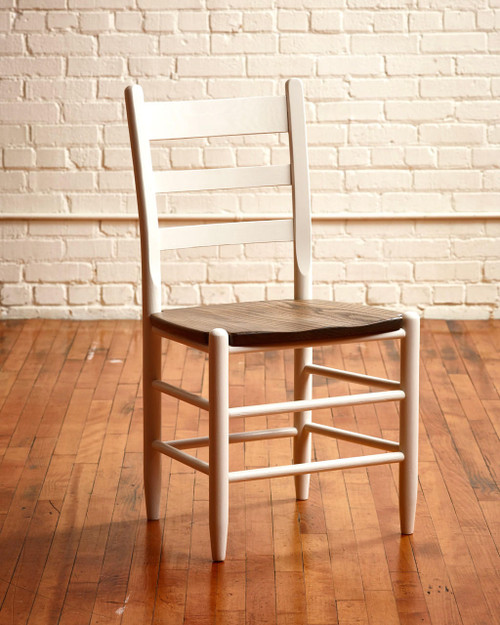
Cottage
The Cottage family pairs a roomier seat with either a 37 inch back or a visually commanding 44 1/2 inch back. Both models retain a standard 18 1/2 inch dining seat height.
Martha Washington
A 44 1/2 inch ladder back gives this chair a taller, more traditional presence around the table. It suits rooms where the chair back should remain a visible part of the furniture composition.
Compare the Current Collection
Dining Chair Size Reference
Seat dimensions can vary slightly by seat material. Use this chart to narrow the model, then confirm the complete dimensions and current options on its product page.
| Dining Chair | Seat Height | Overall Back | Best Starting Point |
|---|---|---|---|
| Farmhouse Dining Chair (TC-#15) | 16 1/2" | 35 3/4" | Compact rooms, closely spaced settings, and lower seating preference |
| Farmhouse Dining Chair (Large) (TC-#15L) | 18" slatted 18 1/2" other seats |
37" | Roomier farmhouse seating with a conventional adult dining scale |
| Cottage Dining Chair (TC-#19) | 18 1/2" | 37" | Substantial everyday dining chair with a standard height back |
| Cottage Tall Back Dining Chair (TC-#19T) | 18 1/2" | 44 1/2" | Cottage proportions with a taller and more visible ladder back |
| Martha Washington Dining Chair (TC-#17) | 18 1/2" | 44 1/2" | Tall traditional ladder back character and strong visual presence |
Choose the Seat
Wood Structure or Woven Texture
The current dining chair collection offers four seat styles. Each changes the appearance, surface feel, and amount of visible wood in the completed chair.

Slatted Double Scoop
Individual wood slats are shaped to create a contoured sitting surface with traditional solid wood character.

Solid Wood
A continuous shaped surface creates a classic furniture appearance and keeps the seat visually coordinated with the frame.
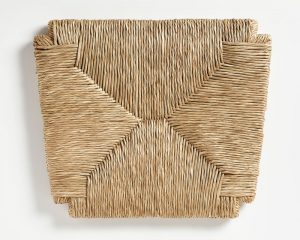
Seagrass
Natural fiber introduces visible texture, subtle color variation, and a softer contrast with stained or painted wood.
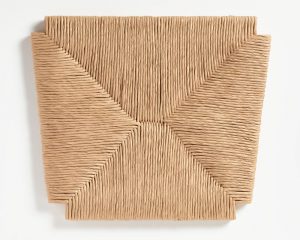
Paper Cord
A tightly woven seat adds a defined pattern and tactile contrast while preserving the traditional chair frame.
See the Furniture in Context
Dining Chairs Around a Shared Table

Use this scene to compare the appearance of different chair backs and finishes together. For your own layout, check the width of each chair, the usable space between table legs and the clearance beneath the tabletop. A photograph does not establish those measurements.
Plan How Many Chairs Will Fit
Use 24 Inches per Person as a Starting Allowance
A 24 inch allowance for each chair position is a practical first estimate for many armless dining chairs. Wider personal space, broad chair backs, table legs, and end place settings may require more.
These figures are planning references, not guaranteed capacities. Measure between obstructions, consider the chair at its widest point, and allow extra room if diners should have more elbow space.
Think Beyond Seat Height
Back Height Changes the Whole Room
A 37 inch chair back tends to sit more quietly around a table. A 44 1/2 inch ladder back remains much more visible above the tabletop and can give the dining group a stronger traditional presence.
The taller chair is not a higher seating position. The Tall Cottage and Martha Washington models keep an 18 1/2 inch seat height while extending the back.
Useful when the table, view, artwork, or smaller room should remain visually open.
Useful when traditional ladder backs should become a prominent part of the room.
Built for the Gathering Table
Curved Backs, Traditional Joinery, and Solid Wood
The dining chairs use curved back slats or steam bent back components to create more natural contact than a flat back. Interlocking joinery and swelled joint construction create the frame connections without relying on glue.
See how the furniture is builtCoordinate the Complete Chair
Finish and Seat Work Together
Wood tones emphasize the grain and shaped components. Painted frames create a stronger color statement, while woven seats add natural contrast. Some models also offer a contrasting wood seat finish.
Use the furniture finish guideAvoid These Common Mistakes
A Better Fit Starts with the Complete Room
Measuring the top only
The apron and base can reduce both knee room and usable chair positions.
Using only seat width
The chair frame or back may be wider than the actual sitting surface.
Ignoring the pulled out chair
A chair that fits under the table may still block a walkway when someone is seated.
Assuming every seat is identical
Seat material can change the exact width, depth, and height of the same chair model.
Common Questions
Dining Chair Buying Guide FAQ
What dining chair seat height should I choose?
Choose the seat height that leaves comfortable space beneath the usable underside of your table. About 10 to 12 inches is a useful starting point for many adults, but body size, table construction, and personal preference matter.
How many dining chairs will fit along my table?
Begin with about 24 inches of clear usable table length per armless chair, then adjust for the actual chair width, table legs, end seating, and the amount of elbow room you prefer.
What is the difference between the Farmhouse and Large Farmhouse chairs?
The Farmhouse TC 15 has a compact 16 1/2 inch seat height and 35 3/4 inch back. The Large Farmhouse TC 15L has a wider seat, 37 inch back, and an 18 or 18 1/2 inch seat height depending on the seat material.
What is the difference between the Cottage and Tall Cottage chairs?
Both use an 18 1/2 inch seat height and offer the same four seat styles. The standard Cottage has a 37 inch back, while the Tall Cottage extends the ladder back to 44 1/2 inches for greater visual presence.
Which seat material is best?
There is no single best choice. Slatted and solid wood emphasize shaped wood construction. Seagrass and paper cord add woven texture and a different surface feel. Compare appearance, dimensions, and care preferences before ordering.
Can I mix dining chair styles or finishes?
Yes, when the combination is intentional. Repeating a finish, seat material, back shape, or wood tone can help different chairs feel related. Confirm current finish and contrast options on each product page.
Still Comparing?
Tell Us About Your Table and Your Space
Send us the table height, usable length between supports, room dimensions, and the chair styles you are considering. We will help you compare the current models and options.