
Stool Height Buying Guide
Counter Stool vs Bar Stool: Choose the Right Height
The best stool begins with one measurement: the height of the surface where it will be used. This guide explains the difference between standard, counter, and bar height seating, then helps you account for knee clearance, stool width, backs, and the number of seats your space can comfortably hold.
The Quick Answer
Match the Seat to the Surface
For comfortable seating, allow roughly 10 to 12 inches between the top of the stool seat and the usable underside of the table, counter, or bar.
For a 28" to 30" Surface
Useful with many dining tables, desks, craft tables, work areas, and flexible seating spaces.
Shop the 18" Round Top StoolFor an Approximately 36" Surface
The usual starting point for standard kitchen counters, islands, and counter height tables.
Shop all Counter StoolsFor an Approximately 42" Surface
Designed for taller home bars, pub tables, restaurant bars, and other bar height surfaces.
Shop all Bar StoolsThe Main Difference
Counter Height vs Bar Height

Counter Stool
A counter stool is shorter because kitchen counters and islands are commonly around 36 inches high. A 24 inch seat leaves approximately 12 inches between the seat and a typical 36 inch surface.
- Standard kitchen counters
- Kitchen islands with seating overhangs
- Counter height dining tables
- Many craft and work surfaces

Bar Stool
A bar stool is taller because bar surfaces are commonly around 42 inches high. A 30 inch seat leaves approximately 12 inches between the seat and a typical 42 inch surface.
- Home bars
- Pub height tables
- Restaurant and hospitality bars
- Tall gathering surfaces
Measure the Space
Use the Usable Underside, Not Only the Top
A thick countertop, deep apron, support rail, or drawer can reduce the space available for knees. Measure from the floor to the lowest obstruction where someone will actually sit.
- 1
Measure from the floor
Measure to the underside of the counter, table, bar, or lowest obstruction.
- 2
Subtract 10 to 12 inches
The result gives you a useful target range for the stool seat height.
- 3
Check the overhang
Confirm that knees and feet have space without hitting cabinetry or supports.
- 4
Compare the actual stool
Review seat width, overall width, depth, back height, and footrest placement.
of clearance
Reference Chart
Stool and Surface Height Guide
| Stool Category | Seat Height | Typical Surface Height | Common Uses | Furniture Made In USA Example |
|---|---|---|---|---|
| Standard | 18" | Approximately 28" to 30" | Dining tables, desks, craft areas, flexible seating | Round Top 18 Inch Stool (TC-#18) |
| Counter | 24" | Approximately 36" | Kitchen counters, islands, counter height tables | Round Top 24 Inch Counter Stool (TC-#24) |
| Bar | 30" | Approximately 42" | Home bars, pub tables, restaurant bars | Round Top 30 Inch Bar Stool (TC-#30) |
These are general starting points. Use your actual surface and stool measurements before ordering.
Choose the Seating Style
Backed Stool or Backless Stool?
Once the height is correct, think about how long people will sit, how much support they prefer, and whether the stools need to tuck beneath the surface.
Backless Round Top Stool
A backless stool has a smaller visual and physical presence. It can often tuck beneath an overhang and is easy to approach from different directions.
- Useful where space is limited
- Easier to tuck beneath many surfaces
- Simple seating for shorter or flexible use

Backed Counter or Bar Stool
A backed stool provides a more chair like seating experience. It can be a better starting point for meals, conversation, and spaces where people may remain seated longer.
- Support through the back
- More substantial furniture presence
- Allow room for the back behind the counter edge
Shop Backed Stools
Three Traditional Styles in Counter and Bar Heights
If you prefer the support and presence of a chair back, explore these handcrafted solid wood styles. Each family is available with a 24 inch seat for counter height surfaces and a 30 inch seat for bar height surfaces.

Martha Washington
Classic curved ladder back styling with a broad, substantial profile and multiple seat choices.
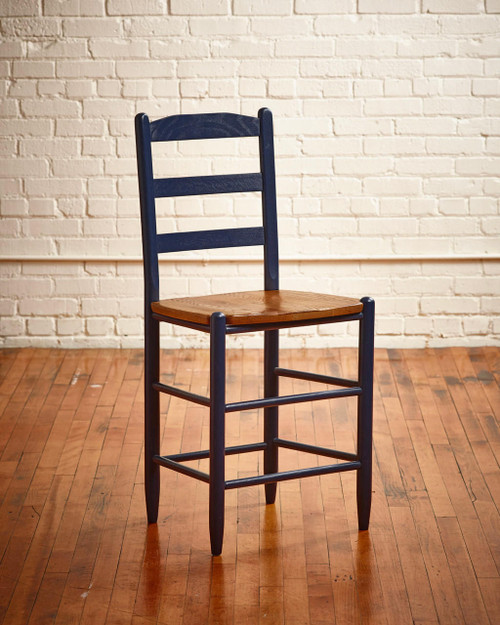
Farmhouse
A familiar ladder back design with steam bent back posts, curved slats, and several seat choices.
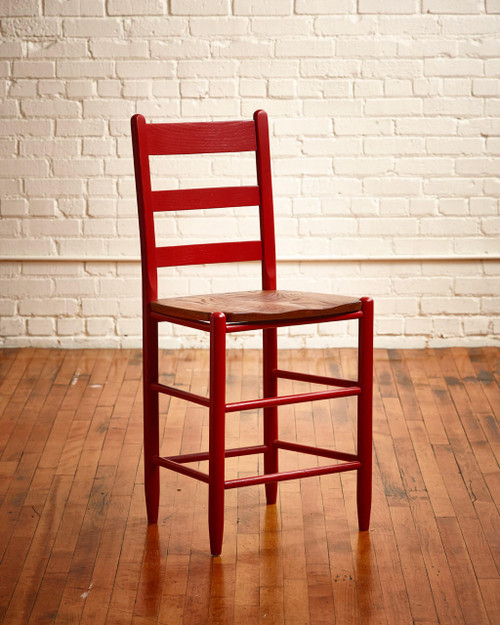
Cottage
A traditional backed stool with curved support, a refined silhouette, and counter or bar height options.
Plan the Whole Row
How Many Stools Will Fit?
Do not divide the counter length by seat width alone. People need room to sit down, turn, use their elbows, and move a stool without striking the next one.
Measure usable overhang
Exclude corners, supports, cabinets, appliances, and any area where knees cannot fit.
Check overall stool width
Backed stools may be wider than their seat measurements. Use the widest listed dimension.
Leave personal space
Plan open space between stools so each person can sit and move comfortably.
Protect the ends
Leave clearance from walls, counter ends, doorways, and nearby furniture.
Shop by Height
One Traditional Design in Three Heights
The Round Top Stool makes the height difference easy to compare because the same compact solid wood design is available in standard, counter, and bar heights.

Avoid These Problems
Five Common Stool Buying Mistakes
An apron, drawer, or support beneath the top can reduce knee clearance.
Custom islands, older homes, and commercial surfaces can differ from common dimensions.
On a backed stool, the total height is much greater than the height of the seat.
A mathematically possible row may still feel crowded when people sit and move.
Allow room behind the stool for people to sit without blocking a walkway or doorway.
Common Questions
Stool Height Guide FAQ
What height stool should I use for a 36 inch counter?
A 24 inch counter stool is the usual starting point for an approximately 36 inch counter. Confirm the distance from the seat to the usable underside of your counter before ordering.
What height stool should I use for a 42 inch bar?
A 30 inch bar stool is generally suited to an approximately 42 inch bar surface. Measure the actual bar and check for aprons, supports, or other obstructions.
Can I use a 30 inch stool at a kitchen counter?
A 30 inch stool will usually be too tall for a standard 36 inch kitchen counter, leaving only about 6 inches between the seat and surface. A 24 inch stool is generally the better match.
What is an 18 inch stool used for?
An 18 inch stool is standard seating height and can work with many dining tables, desks, craft tables, classrooms, restaurants, and flexible work areas. For a table, compare it with the seat height of the dining chairs already used there.
How much space should be between the seat and counter?
Roughly 10 to 12 inches is a useful starting range. Personal comfort, the thickness of the counter, and obstructions beneath it can affect the final fit.
Should I choose a backed or backless stool?
Choose based on support, sitting time, storage, and available space. Backed stools feel more like chairs, while backless stools have a compact profile and can often tuck beneath the counter more easily.
Need Help Measuring?
We Will Help You Choose the Right Stool
Send us your surface height, usable underside measurement, available width, and preferred stool style. We can help you narrow the options before you order.